Hydraulic Press
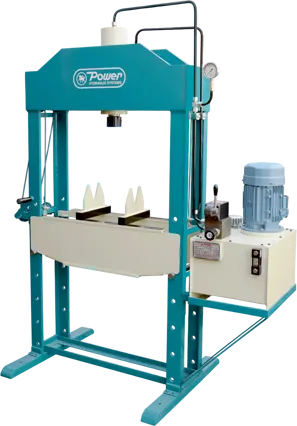
A hydraulic press is a mechanical machine that utilizes hydraulic fluid to generate a compressive force. It typically consists of a large cylinder, known as the hydraulic cylinder, which is powered by hydraulic pumps. The press works on the principle of Pascal's law, where a change in pressure applied to an enclosed fluid is transmitted undiminished to all portions of the fluid and to the walls of its container.
The main components of a hydraulic press include a reservoir for hydraulic fluid, a pump to generate pressure, valves for controlling the flow of fluid, and a cylinder with a piston. The press is designed to exert a force upon a workpiece, typically metal or other materials, causing it to deform or undergo a specific operation such as bending, stamping, forming, or molding.
Hydraulic presses are widely used in various industries for tasks ranging from metal forming and forging to plastic molding and rubber processing. They offer advantages such as high force capabilities, precision control, and the ability to exert pressure evenly across a workpiece. The press can be operated manually, semi-automatically, or fully automatically depending on the specific application.
Overall, hydraulic presses play a crucial role in manufacturing processes, enabling the efficient shaping and manipulation of materials for diverse industrial applications.
Certainly, here are more detailed aspects of a hydraulic press:
There are several types of hydraulic presses, each designed for specific applications and manufacturing processes. Here are some common types:
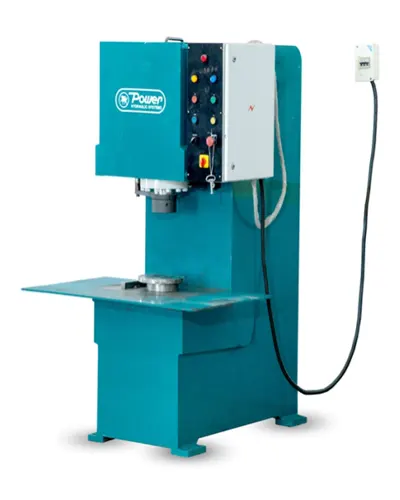
Capacity – 10 Ton – 100 Ton
Assembly | Bending Steel Pipe | Blanking | Coining | Piercing
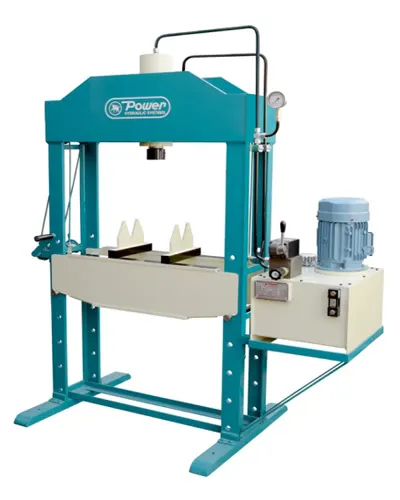
Capacity – 5 Ton – 200 Ton
Straightening | Automobile Industries | Cutting | Flanging Of Metal Pin And Bush Fitting
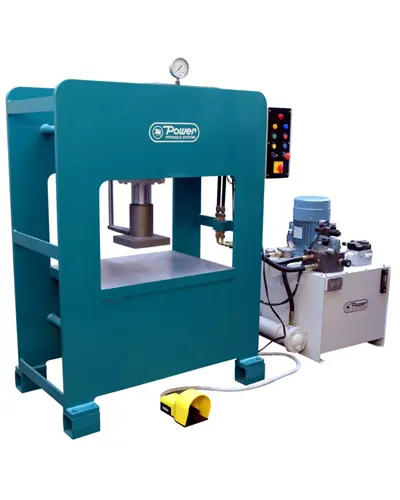
Capacity – 20 Ton – 250 Ton
Embossing | Stamping | Punching
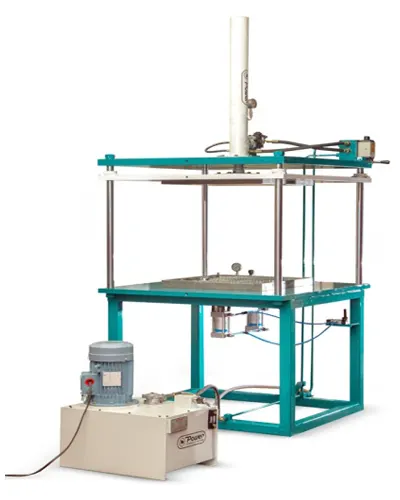
CAPACITY – 5 TON – 250 TON
Forming Plastics | Die Cutting | Vertical Injection Moulding | Rubber Moulding | Frp & Dmc Moulding
Our systems powering industry across sectors.
“Established in Rajkot, Gujarat, Power Master Products is a specialist manufacturer of hydraulic cylinders, jacks, power-packs and custom hydraulic systems.
We combine Indian manufacturing strength with global quality standards to serve industries across India and beyond.”
Mehta Ind, Estate, 5, Umakant Pandit Udyog Nagar, Mavdi Plot, Rajkot - 360 004, Gujarat (India).
Tell us your requirements or send us your drawings — our team will propose the optimal hydraulic solution with pricing & lead time.